The invitation at the center of Defining Moments is to choose an experience that helped make you who you are.
That is a different starting point from asking for a list of accomplishments. It directs attention toward the meaning a person finds in a life they have lived.
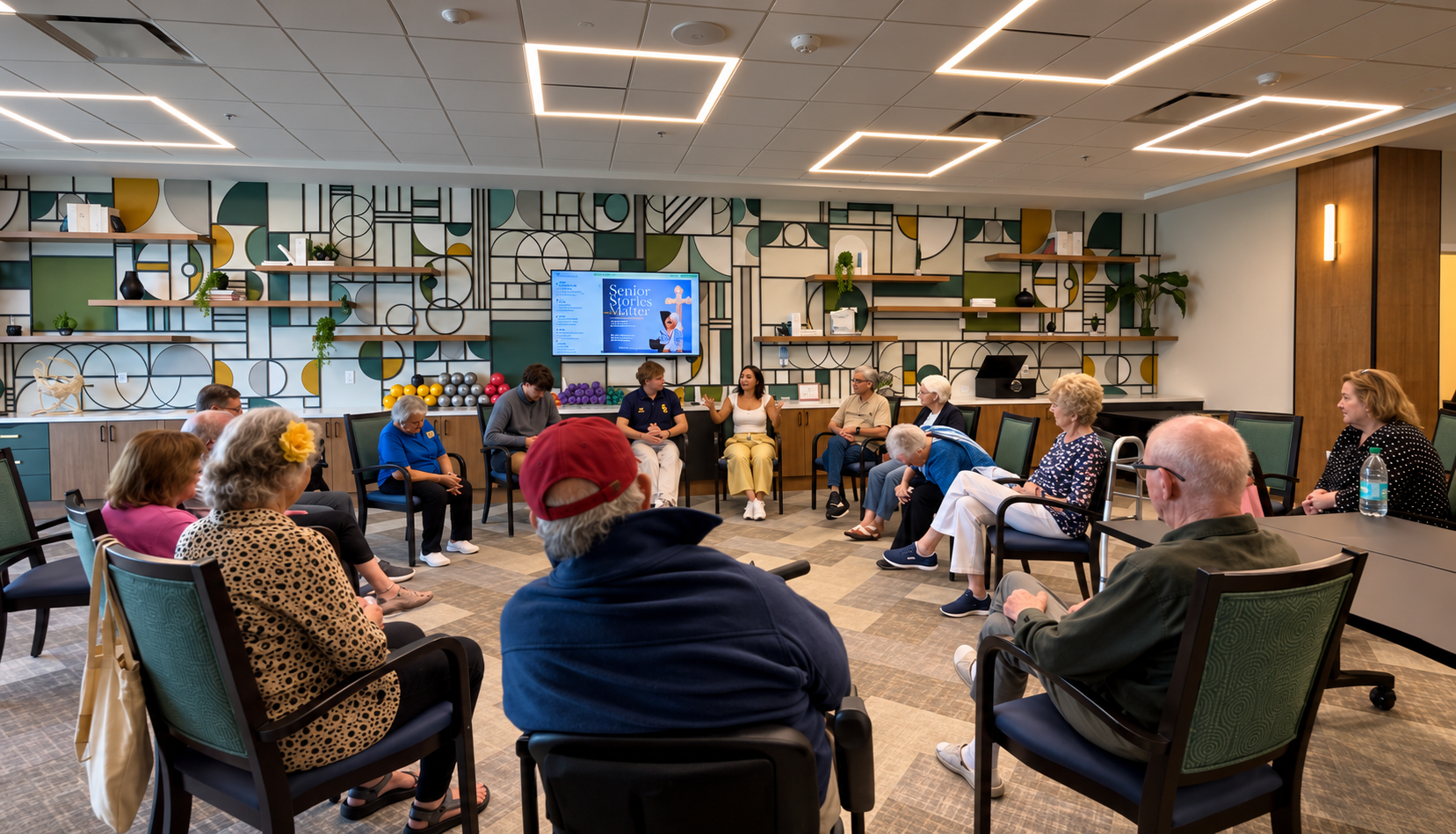
Founded and led by 17-year-old Los Angeles student Maximillian Danner, Defining Moments brings seniors together with high school students and college volunteers through guided storytelling, improvisation and reflection. Its format provides a practical setting for a larger question: whose experience do we make time to hear?
“Everybody has a story, but not everyone has someone to tell it to, so when you can help find an audience who wants to listen to it and can learn something of their own from it, it’s always a good thing,” Danner says in written materials supplied by his team.
A story needs an occasion
The program’s activities turn that belief into a series of invitations. In the Connection Game, a participant links a word with an experience from their own life and tells a story about the connection. Other exercises involve memory, improvisation and voice.
The significance of the prompt is its scale. It gives someone a place to begin. The participant supplies the experience and the meaning attached to it.
Twice a year, the work extends to a public event, Defining Moments: An Evening of Storytelling with Elders from Our Community. Seniors share one defining experience, accompanied by photographs from childhood and significant moments in their lives. They can also answer questions from the audience.
Interviews, help shaping the narratives and rehearsal precede the performance. Teen and college volunteers co-facilitate the sessions.
Read as a communication practice, that preparation matters. Declaring that people’s voices count is an abstract commitment. Arranging the prompts, rehearsal and audience gives that commitment a practical form.
The listener has work to do, too
Danner traces his interest to listening to his grandmother describe her childhood and her experiences growing up during World War II. He says that working with other seniors is a way of allowing her legacy to live through him after her death.
He also describes what he hopes to receive from older participants: advice and glimpses of life before he was born. Listening is therefore part of his role as the program’s founder, alongside leading its activities.
That relationship suggests an approach to leadership worth considering. A person who creates opportunities for others to speak can also be changed in understanding by what those people know. The role includes making room for knowledge that originates elsewhere.
The supplied materials do not establish how every participant experiences the program. They do, however, describe a clear editorial idea: a life story can warrant attention because of what it holds for a listener, without needing a public reputation to introduce it.
Defining Moments gives that idea a specific form—a senior chooses an experience, prepares to share it and has an audience invited to listen. The question for the rest of us is equally specific: whose story would we hear if we made the occasion for it?
Source note: This editorial reflection is based on written materials and statements supplied by Maximillian Danner’s team. Quotations come from those materials; broader observations are editorial interpretation.
Read us often? Make Thought Leaders Ethos™ a preferred source in Google Search and see our reporting more often in Top Stories.
Bill Choudhry is an experienced cold outreach and outbound sales professional. His approach is non-salesy, consultative, and authentic. He enjoys long walks at the park, frisbee football, and baking magical brownies for his marketing friends.