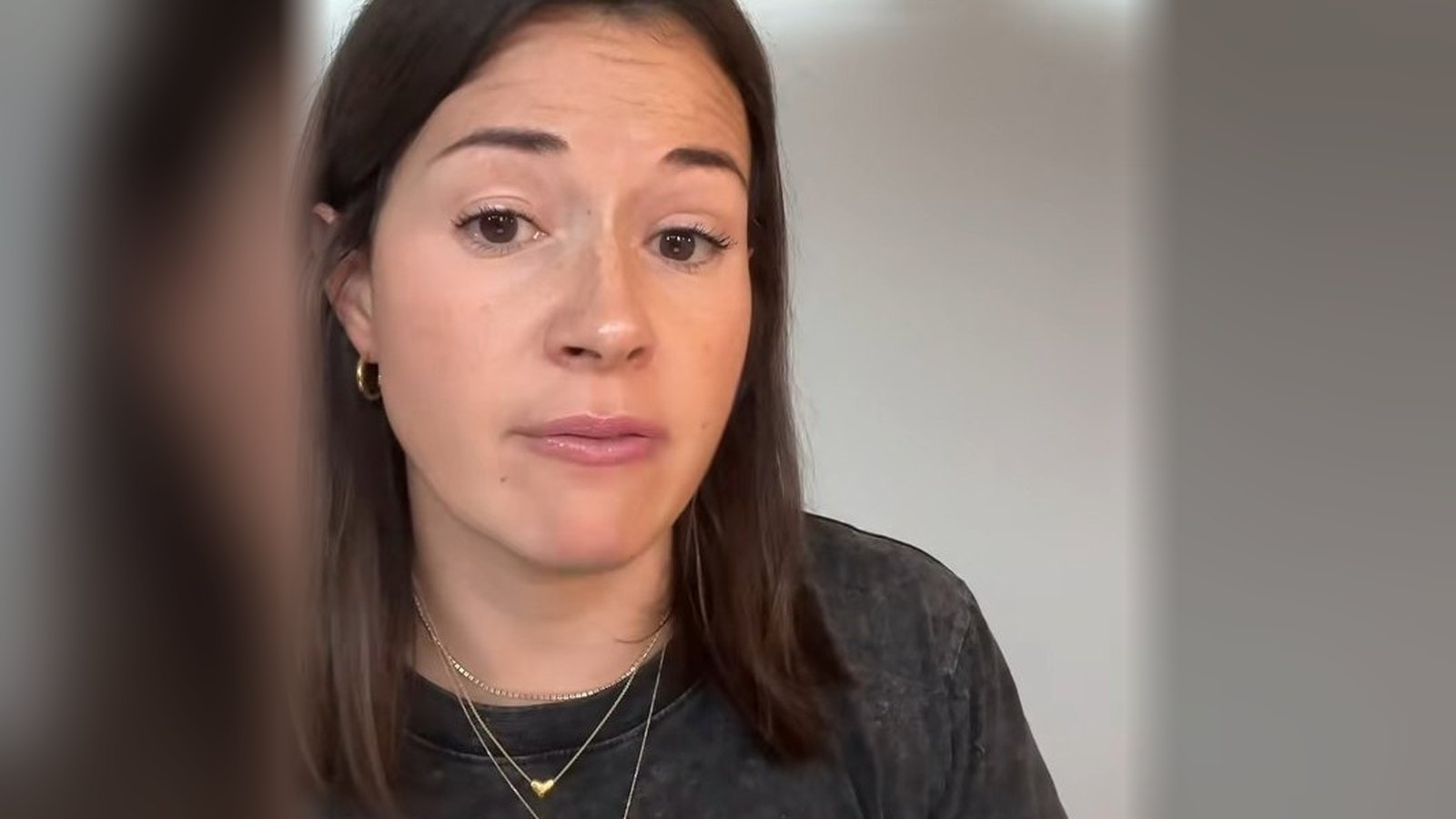
Evidence Based Kate is a Chicago educator with a master’s degree in education who explains education research for teachers and parents on TikTok as @evidencebasedkate. She says she has spent 20 years in education, more than 10 of them in classrooms “across every kind of school.” She started posting in January 2026. By October she had about 28,000 followers, 658,000 likes and more than 6 million views, and her most-watched video, on why teachers are “not allowed to be human,” passed 900,000 views. She goes by Kate publicly.
Key Takeaways
- Kate holds an M.Ed., lives in Chicago and describes her work as “demystifying education research.”
- She calls herself a “retired mean teacher.” Her Substack says she taught for more than 10 years and now writes “what teachers can’t” and translates “what parents aren’t told.”
- Her two biggest videos, at about 929,000 and 627,000 views, argue that teachers are policed off the clock in ways other professionals aren’t.
- She regularly takes on popular ideas in education, from John Hattie’s Visible Learning to redshirting kindergartners, with the research in hand.
- She links to every study she cites on her Linktree, so viewers can read the sources for themselves.
Who is Evidence Based Kate?
Evidence Based Kate is the name an experienced Chicago educator uses online. Her TikTok bio is short: “Demystifying education research. M.Ed. Chicago.” Her Linktree adds that she offers “education updates, insights, and advocacy from an M.Ed. professional.” Her Substack, which launched in 2026, says she has been in education for 20 years.
Her format is simple. She picks a question teachers or parents are arguing about, finds the research, explains what it says in plain English, and posts the sources. Topics range from classroom management to kindergarten start dates to whether gifted programs help or hurt kids later in life. Most videos open with “Teachers,” “Parents” or both.
What sets her apart is that she is willing to say when a popular idea doesn’t hold up, including ideas she once believed herself.
Ten years in the classroom
Kate writes about her teaching years with unusual candor. In a June 2026 Substack essay, “Why Teachers Learn to Ignore Themselves,” she describes taking a mid-year job teaching seventh-grade literacy in her fifth year in the classroom. Her students’ science essays were well behind grade level. When she raised it, her colleagues and principal implied she was the one failing, until a student explained the unwritten rule: “Well, you’re supposed to fix these for us.” Her conclusion: “The system requires the appearance of competence much more than actual competence.” She calls moments like that a form of “moral injury” teachers face every year.
In the same essay she reflects on her 2012 master’s thesis, which argued that early collaborative tools like blogs and wikis would raise student achievement. It was an idea she says the field is only now questioning. That willingness to revisit her own assumptions runs through her work.
She’s also a parent. In a video on redshirting she mentions that her son, in kindergarten, has a late-August birthday.
“The system requires the appearance of competence much more than actual competence.”
Kate, Evidence Based Kate on Substack
Why her “teachers aren’t allowed to be human” videos went viral
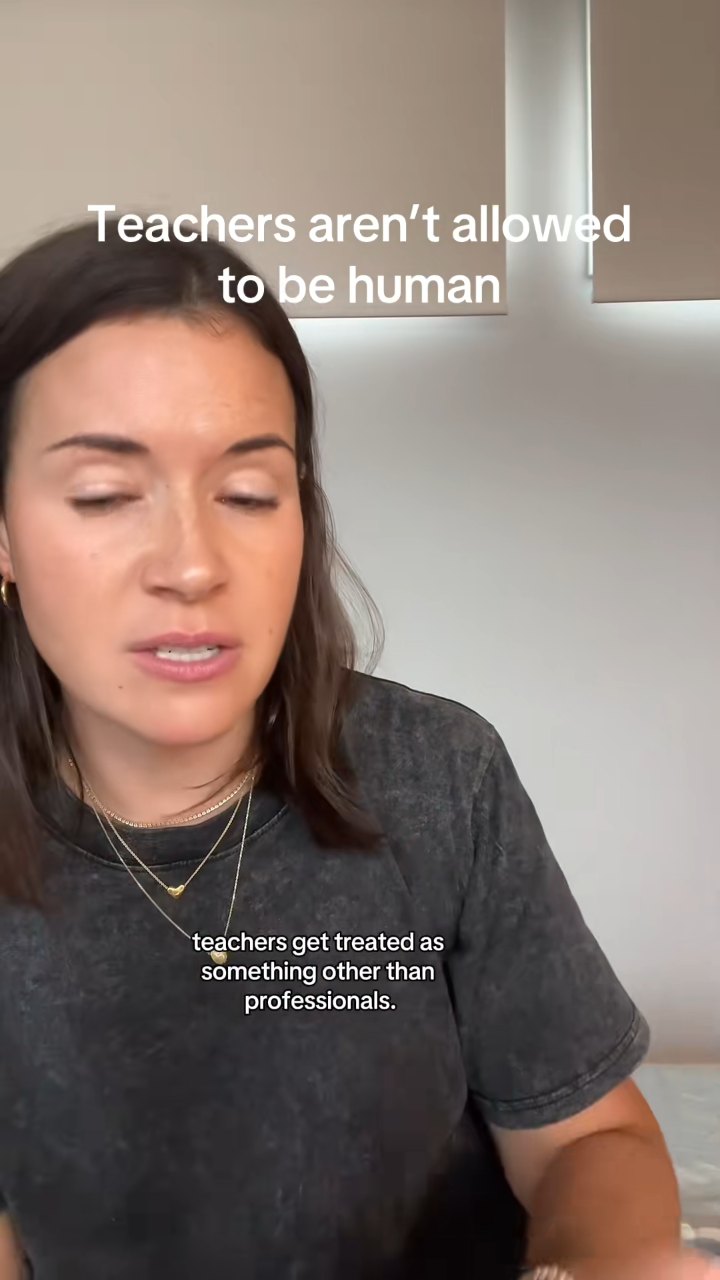
Her most-watched video, with about 929,000 views and 160,000 likes, opens with a simple line: “I’m wearing what I want because I am an adult.” In it, she argues that teachers are policed in ways “virtually no other profession” is, from what they wear on vacation to what they post. She remembers working as a bartender during her first three years of teaching, half an hour from her school, and still being “so paranoid” about being found out.
Her explanation draws on research about gender and work. “Teachers are, by and large, women,” she says, and “professions dominated more by women get held to standards of selflessness and moral character” that male-dominated professions don’t face. “We don’t do this to lawyers, engineers, doctors, politicians.”
A follow-up answering critics drew 627,000 more views. Her point: teachers are adults behaving within the law, off the clock. “You need to trust an adult,” she says. “Leave them alone.” She connects that scrutiny directly to the teacher shortage and high burnout.
What does the research say? Kate’s most-shared findings
The “mean” teacher may be doing it right
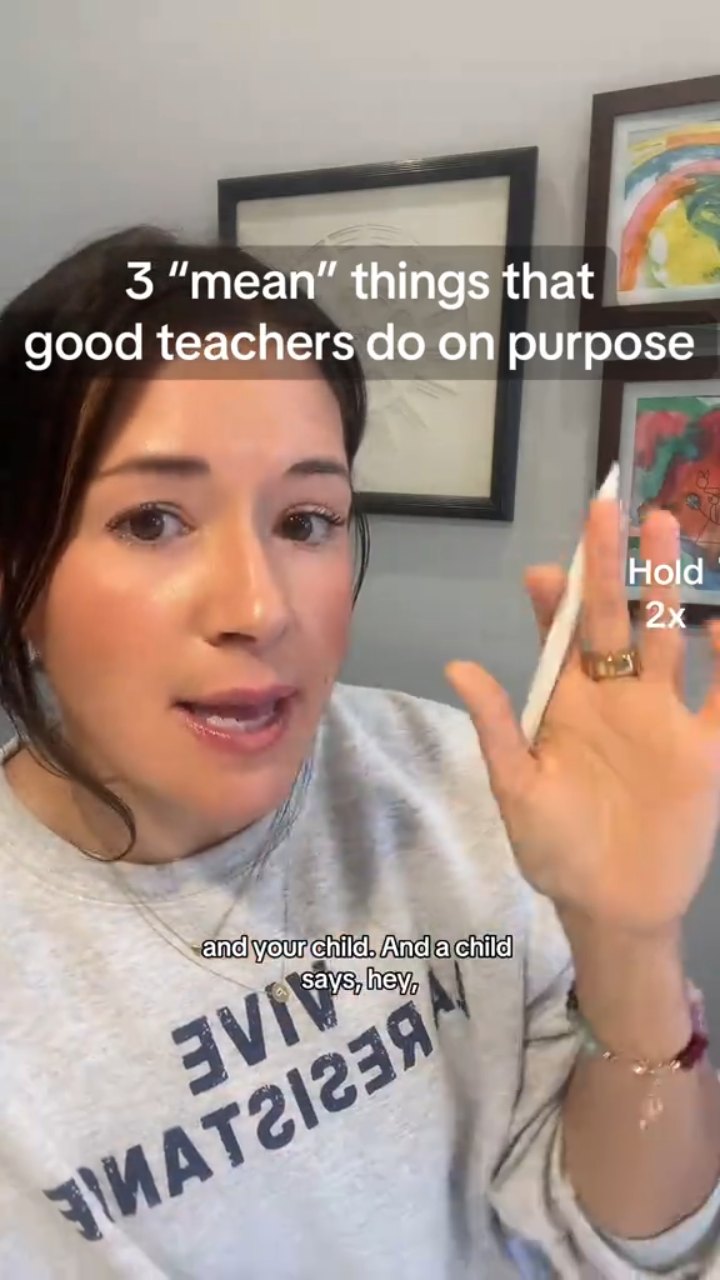
In a video with more than 310,000 views, Kate lists things “mean teachers” do that research suggests are good for kids. A teacher who won’t give five more minutes at a transition is building executive function. “Kids who experience real, enforced time limits gradually internalize them,” she says. If every extension is granted, “kids start to learn that everything is a negotiation.” Her caption puts it plainly: “A lot of teaching looks unkind if you mistake discomfort for harm.”
Great teachers aren’t great everywhere
A video with 265,000 views covers a study in which high-performing teachers were offered $30,000 to move to struggling schools. At their new schools, the share of low-income students rose from 68% to 92%, and teacher satisfaction with student motivation dropped from 86% to 39%. Their performance dropped too. A good teacher, she says, is not automatically a good teacher anywhere. School conditions matter.
Redshirting fades by third grade
On holding kids back a year before kindergarten, she cites NWEA data on about 3 million students showing the test-score advantage of redshirting “is completely negated” by third grade, “which is what teachers have been saying anecdotally since the beginning of time.”
Big fish, small pond
Kate also covered Australian research that followed hundreds of thousands of students to age 28. Holding ability constant, students’ rank among their classmates mattered more for their later income than their objective ability. It’s a question she says her Chicago neighbors wrestle with when deciding on gifted testing and selective schools.
The family story effect
Her most-shared parenting video, with more than 200,000 views, covers Emory University research on the “Do You Know?” scale, 20 questions about family history such as how your parents met. Children who knew more of their family’s story showed stronger resilience and emotional health. The most powerful stories, she says, are the ones that “oscillate”: we had this, we lost it, we rebuilt.
Questioning Visible Learning
In a video with nearly 196,000 views, she calls John Hattie, author of Visible Learning, “the OG education influencer.” His meta-analyses shaped professional development across districts. She walks through peer-reviewed criticism of his methods, including a paper titled “How to engage in pseudoscience with real data,” and argues his work “deserves the same level, if not more, scrutiny” than the reading programs examined in the podcast Sold a Story.
Music class is cognitive training
She also argues that schools spent 20 years cutting music because it “wasn’t academic enough,” when research, including a Carnegie Hall synthesis, shows active music-making engages executive function, memory, sequencing, motor coordination and pattern recognition all at once.
Why her approach matters beyond schools
Kate’s method of asking what the evidence says, citing it and changing your mind when it says something else is a model for any leader drowning in confident advice. Her work also echoes themes we’ve covered, from rethinking education for neurodivergent students to recovering from burnout and overwhelm.
Evidence Based Kate’s socials and contact
- TikTok: @evidencebasedkate
- Substack: Evidence Based Kate
- Research links: linktr.ee/evidencebasedkate
- Email (from her TikTok bio): evidencebasedkate@gmail.com
@evidencebasedkate Teachers are expected to surrender their personhood when they take the job.
More in our Who Is series: Who Is Desiree Spierings?, the relationship therapist behind Relationship Wellness, and Who Is Natalie Dragt?, the 23-year-old teaching women to get paid for content. See more in our Education section.
Also in the series: Who Is Edward Sturm? The SEO behind Build in Public and Compact Keywords.
Frequently asked questions
Who is Evidence Based Kate?
Evidence Based Kate is a Chicago educator with an M.Ed. who explains education research for teachers and parents on TikTok and Substack. She says she has worked in education for 20 years, including more than 10 years teaching in classrooms.
What is @evidencebasedkate on TikTok?
@evidencebasedkate is Kate’s TikTok account, started in January 2026. She posts short explainers on education research, classroom management, teacher working conditions and parenting, and links to her sources on Linktree.
Why did Evidence Based Kate go viral?
Her most-watched videos argue that teachers are held to standards of personal conduct off the clock that other professionals aren’t. The first passed 900,000 views and a follow-up passed 600,000.
Does redshirting help kids in school?
According to the NWEA data Kate cites, covering about 3 million students, the test-score advantage of starting kindergarten a year later largely disappears by third grade.
Where can I read the research Evidence Based Kate cites?
She posts links to the studies and articles behind her videos at linktr.ee/evidencebasedkate, and she writes longer pieces on her Substack, Evidence Based Kate.
How can I contact Evidence Based Kate?
Her TikTok bio lists evidencebasedkate@gmail.com.
Source note: This profile is based on Evidence Based Kate’s public TikTok videos, captions and profile at @evidencebasedkate, her Linktree and her Substack, all reviewed on October 17, 2026. She does not publish her last name, and we have not included it. Research findings are described as she presents them; follow her links for the original studies. Follower and view counts are as displayed on October 17, 2026.
Read us often? Make Thought Leaders Ethos™ a preferred source in Google Search and see our reporting more often in Top Stories.