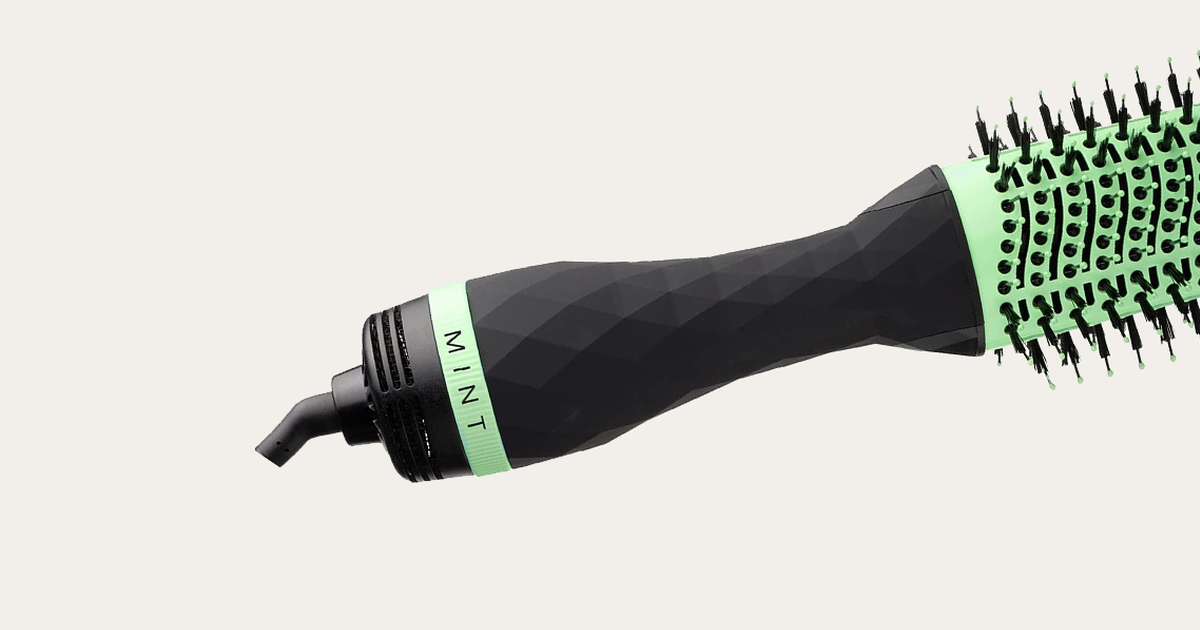
A round blow dryer brush is a hot-air styler with a cylindrical bristled barrel that dries and shapes hair in one pass. Barrel diameter is the decision that matters: 1 to 1.25 inches for short hair and bangs, 1.5 inches for shoulder-length, and 2 inches or more for long hair that needs smoothing rather than curl.
Almost everything written about round blow dryer brushes is about which one to buy. Very little of it is about the part that actually determines whether the blowout works, which is what you do with your hands in the eight minutes after you pick one up.
This is the technique version — sizing, sectioning, and the specific movements that separate a finished blowout from damp hair with a nice smell. It assumes you already know what the tool is; if you do not, start with the plain-English explanation of what a blow dryer brush is and how to use one and come back.
Table of Contents
ToggleRound Brush Blow Dry: The Sectioning Method
A round brush blow dry works section by section, from the bottom of the head upward, in pieces roughly as wide as the barrel is long. Skipping the sectioning is the reason most home blowouts fail: without it, the outer layer dries into shape while the layer underneath stays damp and then reverts within an hour.
The method, in order:
- Clip the hair into four parts — a center part down the back of the head, then a horizontal split at ear level. Six parts on thick hair.
- Release the bottom back section only. Everything else stays clipped. You are working on about a quarter of your hair.
- Take a sub-section the width of the barrel. Any wider and the air cannot reach the middle of it.
- Set the root first. Brush underneath the section at the scalp, lift the hair up and slightly back — past vertical — and hold for two or three seconds. This is where volume comes from. Not from the ends.
- Draw down slowly, keeping light tension the whole way. Count four seconds from root to tip on a shoulder-length section. Most people do it in two.
- Roll and hold at the ends. Under for a classic bend, outward for a flick.
- Let it cool before the next section. The shape sets during cooling, not during heating.
Work up the head, front sections last. The pieces framing your face are the ones anyone looks at, and by then your hands know the movement.
Mini Blowout Brush: Bangs, Short Hair, and Travel
A mini blowout brush has a barrel around 1 inch across and is built for hair too short for a standard brush to grip. Below about chin length, a 1.5-inch or 2-inch barrel cannot complete a full turn on the section — the hair slides off the barrel before the shape sets, and you end up with a dented bend instead of a curve.
Three cases where the small barrel is the right call:
- Bangs. A fringe needs one clean pass with tension, and a big barrel cannot get close enough to the hairline without burning your forehead.
- Pixie and bob lengths. Anything above the jaw needs a barrel that can wrap the section at least once.
- Travel. A small barrel is shorter end to end, and length is what makes these tools awkward in a suitcase.
The tradeoff is time. A 1-inch barrel covers less hair per pass, so a full head takes noticeably longer than the same head with a 1.5-inch barrel. People with long hair who buy small for portability usually regret it.
Blow Drying Styling Brush: Volume vs. Smoothing
A blow drying styling brush produces volume or smoothness depending on barrel size and where you spend your time, and the two goals pull in opposite directions. Volume comes from lift at the root with a smaller barrel. Smoothing comes from contact along the length with a larger one.
The mechanism is worth understanding because it makes the sizing decision obvious. A small barrel bends hair through a tighter arc, which means more spring near the scalp — that is lift. A large barrel bends hair through a shallow arc and, more importantly, holds a longer stretch of the strand against a heated surface at once, which flattens the cuticle along the length. That is shine.
Barrel shape modifies this. An oval barrel gives more flat contact area than a round one of the same nominal size, so oval barrels tend to smooth more and curl less. That is why several manufacturers use an oval profile on their mid-size brushes — MINT’s 1.5-inch round blow dryer brush is oval rather than cylindrical for exactly this reason, and the company positions it for cheekbone-length hair and longer. The Canadian manufacturer has applied the same barrel logic across its range, including its extra-long curling iron.
If you want both — and most people do — get lift at the root with your first three seconds and smoothing on the travel down. Same section, same pass, different halves of the movement.
1.5 Inch Blow Dryer Brush: Who It Fits
A 1.5-inch blow dryer brush fits shoulder-length to mid-back hair, and it is the size to buy if you are only buying one. It is long enough to smooth, small enough to still create root lift, and it suits the largest span of hair lengths of any barrel in the category.
A rough fitting guide:
- Chin length or shorter: 1 to 1.25 inches.
- Chin to shoulder: 1.5 inches.
- Shoulder to mid-back: 1.5 or 2 inches, depending on whether you want more bend or more smooth.
- Past mid-back, or very thick: 2 inches and up, plus patience.
The step up from 1.5 to 2 inches is often described as “more volume.” It is closer to the opposite. A bigger barrel produces a looser, straighter result with more shine and less bounce — good for a sleek finish, less good if you want your hair to look like it has been lifted off your scalp. The barrel-material question sits underneath all of this, and it changes how evenly any of these sizes actually perform; the ceramic versus titanium and tourmaline comparison covers that side.
Compact Blow Dryer Brush for Small Bathrooms and Suitcases
A compact blow dryer brush is one with a shorter overall length and, usually, a smaller barrel — the constraint is the total tool length, not the barrel diameter alone. These tools are typically 12 to 15 inches end to end, which is what makes them awkward to store and worse to pack.
What to check before buying for travel:
- Dual voltage. A 110-volt tool plugged into a 220-volt outlet through a plug adapter will burn out. An adapter changes the plug shape, not the voltage.
- Detachable or folding handle. Rarer on brush dryers than on standalone travel dryers, and worth paying for if you find it.
- A storage pouch. Sounds trivial. Bristles bend permanently when something presses on them in a bag, and a bent bristle field never grips evenly again. Several brushes, MINT’s included, ship with a pouch for this reason.
- Cord length. A six-foot cord is standard for salon use and a nuisance in a hotel bathroom; a shorter cord is genuinely better on the road.
For small bathrooms specifically, the honest answer is that hanging storage beats compactness. A loop on the end of the handle solves the problem that a smaller barrel only half-solves.
Adjusting the Method for Your Hair Type
The sectioning method is the same for everyone. Three variables change: heat, section size, and how much tension you apply.
Fine or thin hair. Lowest heat that holds a shape, smaller sections, and lighter tension. Fine hair takes shape quickly and burns quickly, and the most common damage pattern here is over-styling rather than under-styling. Spend your effort on the root lift; the length needs almost nothing.
Thick or dense hair. Six sections minimum, maybe eight. The temptation is to take big pieces to get through it faster, and it is the reason the blowout fails — the underlayer never dries. Higher heat is appropriate here, and so is a larger barrel.
Coarse or resistant hair. Maximum heat setting, slow travel, and firm tension. This hair type is the one case where a titanium-coated barrel earns its place, since it reaches working temperature faster.
Wavy or curly hair. Stretch first, shape second. Use a paddle or a large round barrel on the first pass purely to elongate, then go back with the round brush for shape. Trying to do both at once is what produces the frizzy, half-set result.
Canadian tool and care brands have made a specific play for this kind of texture-aware guidance in recent years — a shift visible across the country’s beauty sector.
Color-treated hair. Treat it as one step more fragile than its natural texture would suggest, and drop the heat one setting. Bleached hair in particular holds heat longer than it looks like it should.
Barrel Size at a Glance
| Barrel | Best hair length | Result | Sections needed |
|---|---|---|---|
| 1″ | Pixie, bob, bangs | Tight bend, most lift | 4 |
| 1.25″ | Chin to shoulder | Defined bend with lift | 4 |
| 1.5″ | Shoulder to mid-back | Balanced lift and smoothing | 4–6 |
| 2″ | Mid-back and longer | Loose bend, more shine | 6 |
| 2.4″–2.8″ | Long, straightening focus | Smoothing, minimal curl | 6–8 |
If you are between two sizes, size down. A smaller barrel can produce a looser shape by moving faster through the pass; a larger barrel cannot produce a tighter one at all.
Frequently Asked Questions
What size round blow dryer brush should I use for shoulder-length hair?
Use a 1.5-inch round blow dryer brush for shoulder-length hair. That diameter is large enough to smooth the length in a few passes and still small enough to create lift at the root. If your shoulder-length hair is very thick, a 2-inch barrel will cover the head faster but will give a straighter, less bouncy result.
What’s the difference between a 1.5 inch and a 2 inch blow dryer brush, and which one gives more volume?
A 1.5-inch blow dryer brush gives more volume; a 2-inch gives more smoothness. The smaller barrel bends hair through a tighter arc, which creates spring and lift near the scalp. The larger barrel holds more of the strand against the heated surface at once, which flattens the cuticle for shine but produces a looser, straighter shape.
How do I get a salon-style blowout at home with a round brush dryer?
To get a salon-style blowout at home with a round brush dryer, start on damp rather than soaking hair, clip it into four or six sections, and work bottom to top in pieces the width of the barrel. Set the root first by lifting past vertical for two or three seconds, then draw down slowly with light tension and let each section cool before touching it again.
What’s the best small or compact blow dryer brush for short hair, bangs, or travel?
The best small blow dryer brush for short hair, bangs, or travel has a barrel around 1 inch and, for travel specifically, dual voltage. Below chin length a larger barrel cannot complete a turn on the section, so the shape never sets. Check dual voltage before flying, since a plug adapter changes the plug shape but not the voltage.
Does a bigger barrel actually make hair smoother, or just straighter?
A bigger barrel makes hair both smoother and straighter, and the two effects come from the same cause. More of the strand rests against the heated surface at once, which flattens the cuticle — that is the shine — while bending the hair through a shallower arc, which is the straightness. You cannot get one without the other from barrel size alone.
Technique reporting on personal-care tools. Manufacturer specifications are cited as published; performance claims are attributed to the companies making them.
Read us often? Make Thought Leaders Ethos™ a preferred source in Google Search and see our reporting more often in Top Stories.