The Leader Who Returned Something to 40 Million People That Most Systems Were Designed to Take Away
The Leader Who Returned Something to 40 Million People That Most Systems Were Designed to Take Away
There is a category of idea that gets more interesting the longer you sit with it. Not because it is complicated, but because its simplicity keeps revealing new implications the more seriously it is taken. Garry Lineham’s central idea
There is a category of idea that gets more interesting the longer you sit with it. Not because it is complicated, but because its simplicity keeps revealing new implications the more seriously it is taken.
Garry Lineham’s central idea belongs to that category.
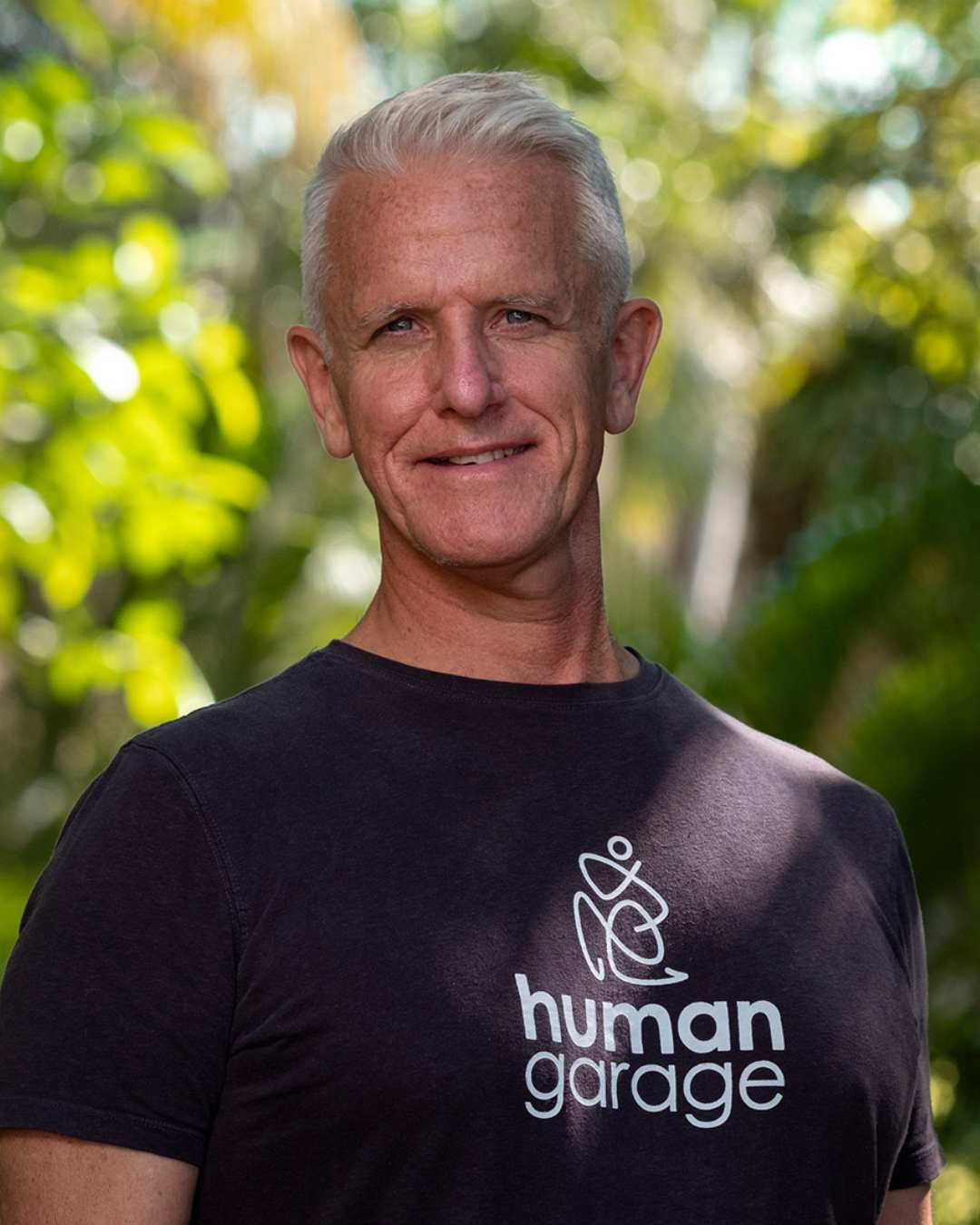
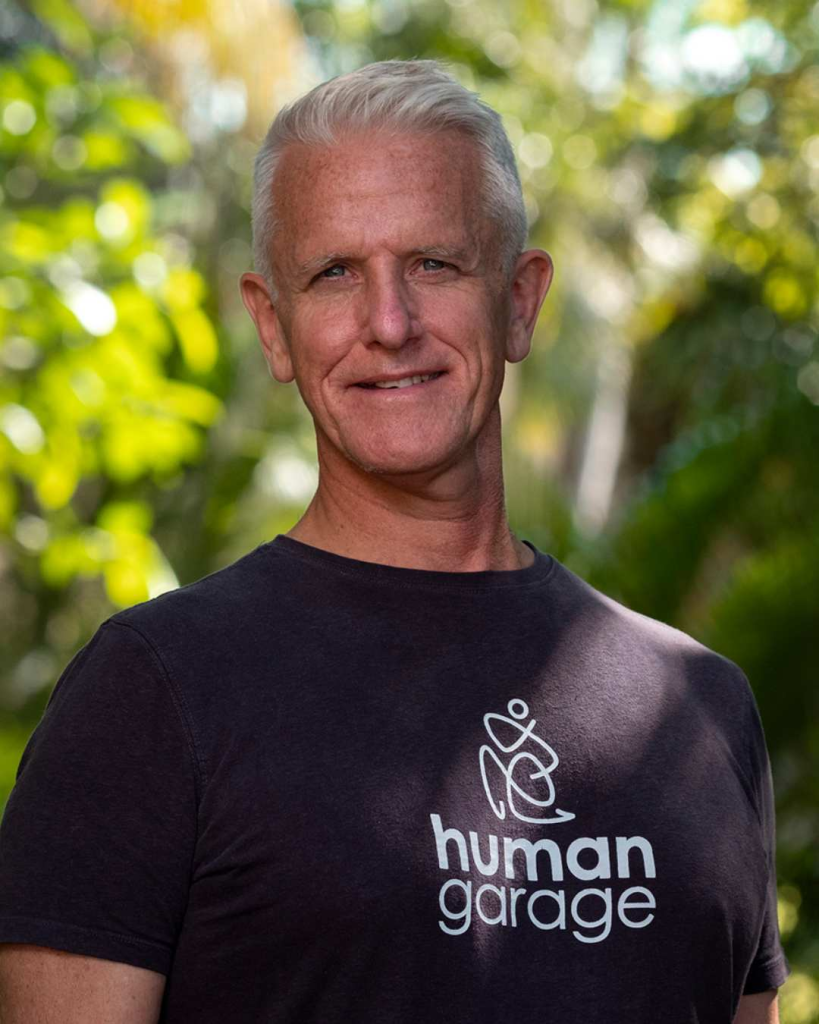
Lineham is the co-founder of Human Garage and creator of Fascial Maneuvers™, a daily self-healing practice now used by nearly 40 million people across more than 80 countries. On May 29 and 30, 2026, he will deliver a keynote at the Berlin Life Summit, joining more than 120 global experts in longevity science, biotechnology, and human performance at one of Europe’s most credentialed health conferences. The event draws over 3,000 participants and sits at the center of the global conversation about human health, performance, and longevity.
The idea he built that movement on is this: the body already knows how to heal itself. The role of the practitioner is not to intervene. It is to restore the conditions under which that innate capacity can operate.
Sit with that for a moment. Because the implications extend considerably beyond the fascial system.
Table of Contents
ToggleWhat Kind of Leader Builds a Movement Around Giving Power Away
Most organizations, regardless of what they claim in their mission statements, are structurally oriented toward creating and maintaining dependency. The product that requires repurchase. The service that cannot be replicated without the provider. The expertise that positions the professional as the permanent intermediary between the individual and the outcome they need.
That structural dependency is not necessarily cynical. It is often the natural consequence of building around a genuine capability that most people do not have. But it is worth examining, because the alternative, building toward the elimination of the dependency rather than its perpetuation, produces a fundamentally different kind of organization, leader, and movement.
Human Garage was built on that alternative. The explicit mission is to return health to the individual. Not to manage it on their behalf. Not to require ongoing professional access as the price of maintaining it. To return it. The language implies that the individual possessed it originally and that something about the systems surrounding them took it away.
What kind of leader chooses that as their founding principle? And what does choosing it reveal about the relationship between genuine leadership and the structures most leaders build?
Leaders who build toward their own dispensability, who orient their work around increasing the capacity and independence of the people they serve rather than their own centrality, consistently produce outcomes that outlast them. Their movements do not require their ongoing presence to sustain themselves because the capability they developed lives in the people who received it, not in the organization that delivered it.
Forty million daily practitioners across 80 countries who practice without Lineham in the room is the most concrete demonstration available of what that leadership philosophy produces at scale.
The Distinction Between a Mission and a Milestone
Lineham describes the Berlin keynote as the next step in a mission that began with one clinic in Venice Beach and now spans 80 countries. There is a conceptual distinction embedded in that framing that most leaders encounter as a choice point somewhere in the development of their work, and the choice they make there determines more about the long-term trajectory of what they are building than almost any strategic decision they will ever face.
A milestone is a destination. Something to be reached, acknowledged, and succeeded by the next milestone. Organizations built around milestones produce a specific culture: urgency toward the target, brief celebration upon reaching it, and then a subtle disorientation as the organization searches for the next thing to be urgent toward. The momentum is external. It requires continuous feeding.
A mission is an orientation. It cannot be completed. It can only be progressed. The organization built around a genuine mission does not experience the arrival at a significant achievement as a destination. It experiences it as confirmation that the direction is correct and the next step is now visible. Berlin is not the destination. It is evidence that the mission is working and that more of the world is ready to receive what it offers.
The leadership implication is direct and uncomfortable for many founders and executives to confront honestly. How much of what currently functions as your organization’s mission is actually a collection of milestones dressed in mission language? Revenue targets, market share goals, geographic expansion metrics, these are milestones. The question behind them, the reason those metrics matter, the change in the world your organization exists to make, that is the mission. When leaders conflate the two, they build organizations that know where they are going but have forgotten why.
Lineham has not forgotten why. Forty million people keeping a daily practice independent of any ongoing commercial transaction is what remembering why looks like at scale.
The System That Was Already There
Here is the intellectual tension at the center of the Human Garage story that most coverage of it misses entirely.
Lineham did not invent a new capability. He did not discover a previously unknown mechanism in human physiology. The fascial system, the connective tissue network that encases every muscle, nerve, and organ in the body and plays a direct role in movement coordination, force transmission, and recovery efficiency, was always there. Its capacity for self-regulation under the right conditions was always documented in the literature for those who looked.
What Lineham did was build a practice around an existing capacity that existing systems had structurally neglected. Not because the capacity was not real. Because acknowledging and activating it did not fit the model those systems were organized around.
That pattern, the existing human capacity that the surrounding systems fail to engage because engaging it would restructure those systems, appears everywhere that genuine innovation eventually emerges.
The most significant innovations in leadership, education, healthcare, and organizational design have consistently followed a similar pattern. Not the invention of something entirely new but the recovery and activation of something that was always available and systematically underutilized by the models designed to manage it. The educational approach that treats students as inherently curious rather than inherently requiring motivation. The management philosophy that treats employees as capable of self-direction rather than requiring continuous oversight. The healthcare model that treats the body as inherently capable of restoration rather than fundamentally requiring external intervention.
Each of those recoveries looked radical against the background of the systems they challenged. Each was actually a return to something more fundamental than what those systems had built on top of it.
Human Garage is that kind of innovation. Not a disruption. A recovery. The question it poses to every leader is a genuinely unsettling one: what innate capacity in the people or the systems you work with are you currently managing around rather than activating?
What Scale Without Dependency Actually Requires
The operational question behind Human Garage’s global reach is worth examining as a leadership framework because the answer challenges several assumptions that most scaling strategies are built on.
Reaching 40 million daily practitioners across 80 countries without pharmaceutical infrastructure, without a professional services delivery model, and without a marketing budget that explains the growth required that the method itself was designed for independent replication from the beginning.
That design requirement produces a different set of constraints than conventional scaling challenges. Three conditions have to be met simultaneously for that transfer to work at scale.
The first is that the capability has to be real. Methods that produce perceived results through the presence of the practitioner rather than through the mechanism itself do not transfer. When the practitioner leaves, the result disappears. Human Garage’s method produces results through a genuine physiological mechanism, the restoration of fascial health, that operates independently of whether Lineham or any of his team is in the room.
The second is that the method has to be learnable by ordinary people in a reasonable time frame without specialized prerequisites. Capabilities that require years of training before they can be practiced independently do not transfer at scale. They create a bottleneck at the level of trained practitioners that limits reach to however many trained practitioners the organization can produce.
The third is that the result has to be perceptible early enough to sustain motivation before habit is established. This is the behavioral science component that most scaling models do not adequately account for. A method that requires extended investment before producing a perceptible result asks the adopter to sustain practice through a period of no feedback. Most people do not do that. A method that produces a result the practitioner can feel within their initial experience creates an immediate motivation loop that sustains practice independent of any external prompting.
Human Garage’s method meets all three conditions. The result of those conditions meeting simultaneously is 40 million daily practitioners across 80 countries who practice without requiring ongoing connection to the organization that taught them.
That is what scale without dependency actually requires. And it starts with a founding decision to build toward the capability living in the person rather than in the organization.
The Berlin Moment as a Thought Leadership Signal
The Berlin Life Summit is not a general wellness conference. It is a curated gathering of people who are actively shaping how the scientific and research community understands human health and longevity at the frontier of what is currently known. The programming covers breakthrough therapies, biotechnology advances, and the latest findings in human performance science.
Lineham’s keynote there is a thought leadership signal worth decoding specifically.
There is a pattern in the history of significant ideas worth recognizing. The idea begins in a specific context, often a clinical, educational, or community setting where the people closest to the problem have the most direct experience of what actually works. It spreads through those communities through direct experience and word of mouth. It eventually reaches a scale where the institutional scientific community can no longer treat it as anecdotal. Then it arrives on the stages where that community convenes to decide what the field knows and where it is going.
Human Garage is at that inflection point. The grassroots validation is already the largest available for a self-healing methodology. The Berlin stage is where that validation enters the institutional conversation that will produce the research infrastructure, the clinical frameworks, and the professional recognition that makes it permanently part of how the field thinks.
Lineham describes Berlin as one of the most forward-thinking cities in the world when it comes to health and longevity.
For the thought leadership community, that inflection point raises a question worth sitting with. In your own field, what ideas are currently at the stage Human Garage was at five years ago? Being demonstrated at the ground level by practitioners who found something that works, but not yet visible to the institutional structures that will eventually validate and integrate them?
The leaders who can identify those ideas and position themselves within their development are not predicting the future. They are reading the present more carefully than most.
Frequently Asked Questions
What is the core philosophical idea behind Human Garage? Human Garage is built on the principle that the body possesses an innate capacity for self-healing that most conventional health systems are structured around managing rather than activating. The organization’s mission is to return health to the individual by restoring the conditions under which that innate capacity operates, specifically through the fascial system, the connective tissue network that plays a central role in movement, recovery, and physical self-regulation. That founding philosophy produced a method designed from the beginning for independent practice rather than ongoing professional dependency, which is what enabled it to reach nearly 40 million daily practitioners across more than 80 countries.
What does Human Garage’s growth reveal about scaling without dependency? Human Garage’s growth from a Venice Beach clinic to 40 million daily practitioners across 80 countries demonstrates that scale without dependency requires three conditions to be met simultaneously at the design stage: the capability must be genuinely real and not dependent on practitioner presence to produce results, the method must be learnable by ordinary people without specialized prerequisites, and the result must be perceptible early enough in the adoption process to sustain motivation before habit is established. Organizations that meet all three conditions create growth mechanisms that operate through the people they serve rather than through the infrastructure the organization maintains.
How does Garry Lineham’s leadership philosophy differ from conventional organization-building? Lineham built Human Garage around the explicit mission of returning capability to the individual rather than maintaining the organization as the permanent intermediary between the individual and the outcome they need. That orientation produces a fundamentally different kind of organization because the measure of success is the independence of the people served rather than their ongoing dependency on the service. Leaders who build toward their own dispensability consistently produce movements that outlast their direct involvement because the capability they developed lives in the people who received it, not exclusively in the organization that delivered it.
What is the significance of Garry Lineham’s keynote at the Berlin Life Summit? The Berlin Life Summit keynote represents an inflection point in the Human Garage story at which grassroots validation at global scale meets institutional scientific recognition. The event, part of Longevity Week Berlin on May 29 and 30, 2026, features more than 120 global experts across longevity science, biotechnology, and human performance with over 3,000 participants. Lineham’s selection places Human Garage’s self-healing philosophy in formal conversation with the research community that will produce the clinical frameworks and professional recognition that makes an approach permanently part of how a field thinks. Details at lifesummit.berlin.
What is the distinction between a mission and a milestone and why does it matter for leaders? A milestone is a destination to be reached and succeeded by the next target, producing organizations whose momentum is external and requires continuous feeding. A mission is an orientation that cannot be completed, only progressed, producing organizations that experience significant achievements as confirmation of direction rather than arrival at a destination. Leaders who conflate the two build organizations that know where they are going but have lost clarity about why. Human Garage’s framing of the Berlin keynote as the next step in a mission rather than a destination is a practical demonstration of what mission-oriented leadership looks like when it is genuinely operational rather than merely stated.
The Question Worth Sitting With
Garry Lineham built one of the most significant self-healing movements in the world by starting with a question that most health organizations never ask themselves seriously.
What if the capacity people need already lives in them, and the role of everything we build is to return them to it rather than to position ourselves permanently between them and it?
That question is not comfortable for organizations whose business models depend on ongoing dependency. It is not comfortable for leaders whose sense of purpose is organized around being needed. It asks something genuinely difficult: whether the thing you are building is oriented toward the increasing capability and independence of the people it serves or toward the perpetuation of your own centrality in their lives.
Human Garage answered that question at the founding level and built an organization whose entire architecture reflects the answer. The result is 40 million people who practice daily without requiring Lineham in the room, a Berlin keynote stage that the scientific community brought to the movement rather than the movement having to manufacture, and a mission that has no finish line because returning health to 40 million people still leaves billions more who have not yet found their way back to what was always theirs.
The thought leaders who will shape the next decade of business, healthcare, education, and organizational design will be the ones who ask that same question seriously in their own domains.
What are you currently managing that you could be returning?
Read next: The Architecture of Movements That Outlast Their Founders: What Enduring Organizations Are Actually Built On
Written by the Thought Leaders Ethos editorial team. Thought Leaders Ethos is a platform for entrepreneurs, leaders, and creatives who believe that the most important business questions are also the most important human ones.
Published by the Thought Leaders Ethos editorial team.
Read us often? Make Thought Leaders Ethos™ a preferred source in Google Search and see our reporting more often in Top Stories.