3 Things everbowl’s Pearl City Expansion Reveals About Franchise Operators Who Actually Scale
3 Things everbowl’s Pearl City Expansion Reveals About Franchise Operators Who Actually Scale
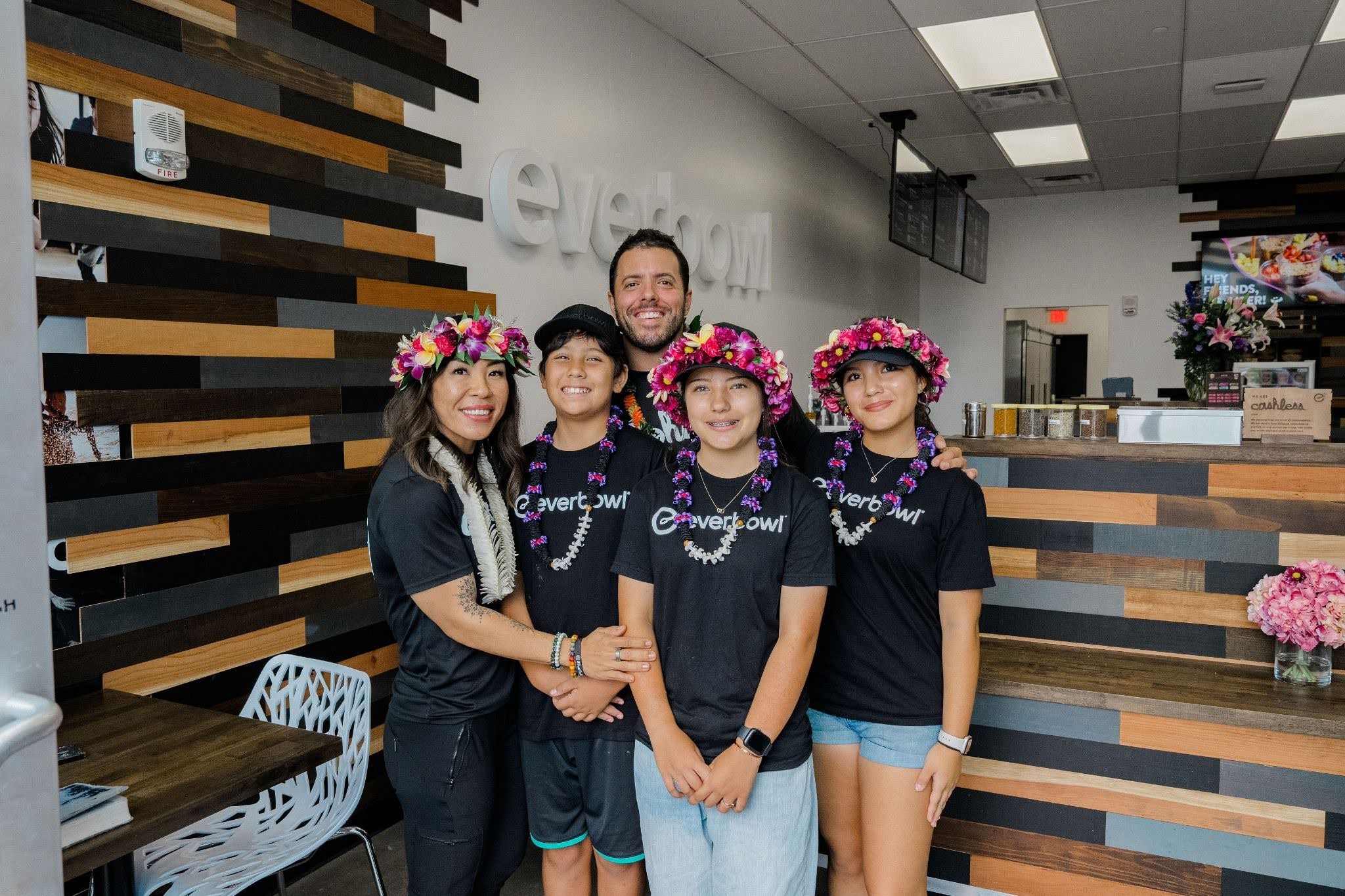
Most entrepreneurs pick a franchise the way they pick a car — by price, by color, by what’s trending. Brandon and Angela Padilla picked one the way they picked a life — by what it stood for. The couple opened their second everbowl loc
Most entrepreneurs pick a franchise the way they pick a car — by price, by color, by what’s trending. Brandon and Angela Padilla picked one the way they picked a life — by what it stood for.
The couple opened their second everbowl location in Pearl City, Hawaii on May 1, 2026 — less than a year after launching their first O’ahu store. That timeline is not a lucky accident. It follows a pattern that shows up in every franchise story worth studying. And for anyone serious about building a business that grows on purpose rather than by chance, what the Padillas did before they ever signed a franchise agreement matters far more than what they did after.
everbowl, the elevated fast-casual destination founded in San Diego in 2016 by entrepreneur Jeff Fenster, has grown to over 100 locations nationwide. The brand is built on better-for-you superfood-based açaí bowls, smoothies, toasts, and other fresh options designed to fuel active lifestyles. It is also built on five stated core values: Make Friends, Have Fun, Kaizen, Be Remarkable, and Have Integrity. The Padillas did not arrive as operators who discovered those values during onboarding. They arrived having already lived by them.
That starting point makes all the difference.
Table of Contents
ToggleValues-Driven Franchise Growth Starts Before the Agreement Is Signed
The most durable franchise businesses share a common origin story. The operator was a customer before they were a franchisee. They believed in the product without a financial stake in it. When the investment came, it confirmed something they already knew — it did not create the conviction from scratch.
Brandon and Angela Padilla were fans of everbowl for years before opening their first location. Originally from San Diego — where everbowl was founded — the Padillas have been fans of the brand for years. Angela’s mother was born and raised in Honolulu, which gave the Hawaii expansion a personal dimension that no financial model could capture.
“Opening our second everbowl location on O’ahu is incredibly meaningful for our family,” Angela said. “As we approach the one-year anniversary of our first store, it feels like a full-circle moment — especially being able to build our life and business in a place that has always been close to our hearts.”
That kind of personal ownership over a brand story does not get manufactured in a training room. Operators either bring it with them or they do not. When they do, every part of the business performs differently — from how they build their team to how they handle difficult days to how quickly they move toward expansion.
Franchisees who treat ownership as a transaction tend to run transactional businesses. Franchisees who treat it as a mission tend to build something that outlasts their first location.
The Operators Who Scale to Two Locations Fast Share One Skill Set Pattern
Scaling from one location to two in under twelve months requires something most franchise conversations skip over entirely: a back-end structure capable of absorbing momentum without breaking.
The Padillas bring a combination that directly addresses the two pressure points that stop most franchise operators from growing past location one.
Brandon’s background spans IT support and engineering. In a high-volume better-for-you fast casual environment, that translates into operational clarity — tighter systems, less friction, better consistency. The infrastructure behind a guest experience is invisible when it works and catastrophic when it does not. His foundation keeps it working.
Angela’s experience in human resources and customer service shapes the team culture from the inside out. Guests feel the difference between a location where the team was hired and a location where the team was built. The Pearl City store reflects the second kind.
“As parents with busy schedules, we know how hard it can be to find food that’s quick, delicious, and consistent,” Brandon said. “That’s what drew us to everbowl. We’ve been fans of the brand for years, and we believe in what makes it different.”
That sentence says more than it appears to. Operators who believe in their product before a customer walks in do not need to be convinced to hold standards on a hard day. The belief does the work their discipline would otherwise have to carry.
What Kaizen Has to Do With Building a Franchise That Grows
Among everbowl’s five core values, Kaizen stands out as the most telling for anyone thinking about long-term brand building. Borrowed from Japanese business philosophy, it translates roughly as continuous improvement — the commitment to getting incrementally better at everything, every day, without waiting for a crisis to force the change.
Angela referenced the brand’s values directly when talking about what drew the family to the opportunity.
“What makes this journey even more special is how closely we align with everbowl’s core values,” she said. “These are values we live by as a family, and we’re excited to bring them to our team and the Pearl City community.”
A brand that encodes Kaizen into its operating culture is not asking franchisees to maintain a standard. It is asking them to raise one. That distinction separates brands that plateau from brands that compound. Operators who absorb that philosophy carry it into their own decision-making — how they run the floor, develop their team, and evaluate whether to expand.
The Padillas have already stated their long-term vision involves continuing to grow across O’ahu and bringing accessible superfood options to more communities throughout Hawaii. Pearl City is the second chapter in a story they are writing with a much longer arc in mind.
Franchisees who think in chapters build something different than franchisees who are only thinking about the current quarter.
The everbowl Model Removes the Hardest Friction Point in Building a Customer Base
One of the structural advantages everbowl gives its operators is that it does not ask guests to overhaul their behavior. The brand’s fully customizable menu — built on superfood bases including açaí, pitaya, blue majic, mango, and cacao — fits into the routine people already have. Premium ingredients, craveable superfoods, and options designed to support an active lifestyle, all accessible in the same timeframe as any other fast-casual stop.
The Pearl City location hosted a Friends and Family preview event on April 30 offering a free bowl to the first 300 guests, followed by the official grand opening on May 1. Events structured that way carry a specific function: they convert a neighborhood from curious to loyal before the location has its first full week. The Padillas know their community. Angela’s family roots in Honolulu gave the opening a connection to the island that a transplant operator simply cannot replicate.
The brand’s growing consumer demand for better-for-you fast casual options creates tailwind for every new location. But consumer demand alone does not build a business — operators do. And the operators who build the most consistent, scalable businesses are the ones who understood what they were building before the doors opened.
Frequently Asked Questions
What is values-driven franchise growth and why does it matter?
Values-driven franchise growth happens when operators choose and build a brand around genuine alignment with the brand’s core mission rather than financial opportunity alone. It matters because operators who believe in what they are selling tend to build stronger team cultures, maintain higher standards under pressure, and expand more deliberately than operators who approach franchising as a pure investment vehicle. The research on franchise performance consistently shows that franchisee conviction is one of the strongest predictors of multi-unit success.
How did Brandon and Angela Padilla open a second everbowl location in under a year?
The Padillas were established fans of everbowl before they became franchisees, giving them a conviction-first foundation that most operators build slowly over time. Brandon’s background in IT and engineering addressed operational efficiency, while Angela’s experience in human resources shaped the team culture at their first O’ahu location. That combination of belief, operational discipline, and strong team culture created the conditions needed to move toward a second location before their first year was complete.
What makes everbowl’s franchise model distinct from other fast casual brands?
everbowl positions itself as an elevated fast-casual destination built on fully customizable superfood-based menus — açaí bowls, smoothies, and toasts made with premium ingredients like açaí, pitaya, blue majic, mango, and cacao. The brand combines accessibility and affordability with a mission to support active, intentional lifestyles, giving franchisees a differentiated product in a growing segment without requiring a price point that limits the customer base.
What does Kaizen mean in the context of franchise business building?
Kaizen is a Japanese philosophy of continuous improvement — the practice of making consistent, incremental gains rather than waiting for major overhauls. In a franchise context, it describes a brand culture that expects operators to raise standards over time rather than simply maintain them. everbowl lists Kaizen as one of its five core values, and operators who genuinely adopt that mindset tend to make compounding gains in team performance, guest experience, and operational consistency that position them for multi-unit expansion.
Who founded everbowl and what is the brand’s core mission?
everbowl was founded in 2016 by entrepreneur Jeff Fenster in San Diego, California. The brand was built on the mission that everyone should feel good about what they put into their bodies, delivering better-for-you options through a direct supply chain of natural superfoods. With over 100 locations nationwide and a fully customizable menu rooted in authenticity and purpose, everbowl continues to expand its presence as a leading brand in the better-for-you fast casual segment.
What Entrepreneurs Can Take From Pearl City
The Pearl City opening is not a story about açaí bowls. It is a story about what happens when an operator chooses a brand because it already reflects who they are — and then builds the operational foundation to back that belief up.
Brandon and Angela Padilla brought conviction, complementary skills, and a genuine connection to the community they serve. everbowl gave them a proven system, a differentiated product, and a values framework that matched their own. The result was a second location before year one was finished and a stated plan to keep growing.
That sequence is repeatable. And it always starts in the same place: operators who believe before they build.
Published by the Thought Leaders Ethos editorial team.
Read us often? Make Thought Leaders Ethos™ a preferred source in Google Search and see our reporting more often in Top Stories.